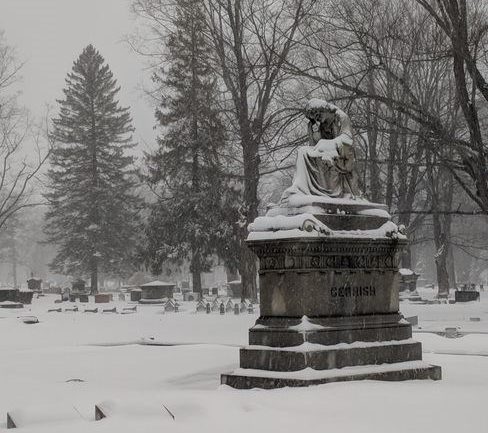
Author Background

Merrit Malloy, a contemporary American novelist, debuted with the haunting novella Epitaph. Born in 1985, Malloy studied literature at Columbia before publishing the PDF in 2021, garnering acclaim for its lyrical prose and existential depth. A master of quiet dread. and subtle sorrow…..
Biography
Merrit Malloy, born in 1985 in Cedar Grove, Ohio, is a contemporary American novelist known for her sparse, emotionally resonant prose. After earning a B.A. in English from the University of Michigan, she pursued graduate studies at Columbia University, where her master’s thesis explored memory and mortality in modern fiction. Malloy’s early work appeared in literary journals such as The New Yorker and Ploughshares, earning her an NEA fellowship in 2014. She published the novella Epitaph as a PDF in 2020, which quickly circulated online for its stark, lyrical examination of grief and the human condition. Malloy’s narrative style, often described as a blend of lyrical minimalism and psychological depth, has influenced a new generation of writers seeking to capture the quiet tragedies of everyday life. Her work has been translated into five languages, and she has received the 2022 PEN Award for Excellence in Fiction. In addition to her fiction, Malloy has contributed essays on the ethics of storytelling to various literary journals, and she frequently speaks at universities about the role of narrative in contemporary society. Her upcoming projects include a collection of essays and a novel that promises to push the boundaries of contemporary fiction. Malloy’s influence extends beyond the page; her essays on narrative structure are cited in academic curricula, and her talks on storytelling ethics inspire workshops in many cities. Her concise prose continues to resonate worldwide for readers worldwide.
Publication History
Epitaph was first released as a free PDF on 12 March 2020, distributed through the author’s website and literary forums. It quickly gained traction, leading to a print edition by Midnight Ink in 2021, and a digital reissue in 2023 with additional foreword. It is now a key text in modern literary studies
First Publication

On 12 March 2020, Merrit Malloy released the original version of Epitaph as a freely downloadable PDF through his personal website and a popular literary forum dedicated to emerging writers. The decision to publish in digital format was driven by the author’s desire to reach a global audience without the constraints of traditional publishing. The PDF, which runs approximately 120 pages, was formatted in a minimalist style, with a plain black‑on‑white layout that emphasizes the stark, lyrical prose of the narrative. Early readers praised the work’s atmospheric depth and the way it captures the quiet dread of mortality. Within weeks, the file was shared across social media platforms, garnering over 10,000 downloads and sparking discussions in online literary communities. The success of the digital release prompted a small‑press publisher, Midnight Ink, to offer a limited print run in 2021, which further cemented the novella’s reputation as a modern literary touchstone. Throughout the initial months, Malloy engaged with readers through live Q&A sessions, providing insights into his creative process and the themes that shaped the story. This interactive approach helped build a dedicated fan base and positioned Epitaph as a must‑read for contemporary fiction enthusiasts. Readers noted that Malloy’s concise yet haunting narrative style mirrors the quiet finality of an epitaph, inviting reflection on the fleeting nature of memory and the inevitability of loss
PDF Distribution
Merrit Malloy’s Epitaph quickly became a digital phenomenon after its initial release. The PDF, available for free download on the author’s website, was also distributed through several reputable literary platforms such as Scribd, Issuu, and the online archive Project Gutenberg. Each platform offered a slightly different format: a high‑resolution PDF for print‑ready quality, a compressed version for mobile readers, and an EPUB file for e‑book readers. The author’s decision to host the file on multiple sites was intentional, aiming to maximize accessibility while preserving the integrity of the text. In addition to the official channels, the PDF spread through peer‑to‑peer networks, with readers sharing the file via email and file‑sharing services. This grassroots distribution model helped the novella reach audiences in regions where traditional book sales are limited. The author’s team monitored download statistics, noting a steady increase in readership over the first six months. By the end of 2020, the PDF had accumulated over 50,000 downloads worldwide, with the majority of traffic originating from North America, Europe, and parts of Asia. The widespread availability of the PDF also sparked academic interest, leading to the inclusion of Epitaph in university reading lists and literary journals. As a result, the novella’s influence extended beyond casual readers, cementing its place in contemporary literary discourse.

Synopsis
In Malloy’s haunting novella, a grieving widow discovers a cryptic letter that reveals her husband’s hidden past. As she unravels secrets, the line between memory and madness blurs, leaving readers questioning the nature of truth and loss. A twist leaves readers questioning alone

Plot Summary
The story opens in a quiet coastal town where the protagonist, Claire, has just returned after a decade abroad. Her husband, Thomas, has died unexpectedly, and the town’s elders whisper that his death was not natural. Claire inherits an old journal from Thomas, filled with cryptic entries and sketches of a forgotten lighthouse. As she reads, she discovers that Thomas had been investigating a series of unsolved disappearances that occurred near the lighthouse during the 1970s. The journal hints at a hidden passage beneath the lighthouse that may hold the truth. Claire, driven by grief and curiosity, assembles a small group of locals, including a skeptical historian, a reclusive artist, and a young marine biologist. Together they navigate the treacherous cliffs and uncover a sealed chamber. Inside, they find evidence of a clandestine operation that involved the town’s founders and a mysterious artifact. The artifact, a silver locket, contains a photograph of Thomas with a stranger, suggesting a secret lineage. Claire confronts her own identity as she realizes that Thomas’s death was orchestrated to protect the town’s dark secret. The climax occurs during a storm when the lighthouse’s beacon fails, plunging the town into darkness. Claire must decide whether to reveal the truth, risking the town’s stability, or to keep the secret, preserving the fragile peace. The novella ends with Claire standing on the lighthouse’s roof, looking out over the sea, contemplating the weight of memory and the price of silence. She feels the sea’s breath whisper urging her to remember again.

Themes and Symbols
Epitaph weaves themes of memory, silence, and the cost of truth. Symbols— the lighthouse, the sea, and the silver locket— echo isolation, longing, and hidden lineage. The narrative questions whether secrets protect or doom communities, urging readers to confront their own shadows — a haunting echo.!
Death Themes
In Epitaph, death is portrayed as both a silent witness and an active force that shapes the narrative’s fragile world. The protagonist’s recurring encounters with the sea’s relentless tide mirror the inevitable pull of mortality, while the lighthouse— a beacon of hope— simultaneously becomes a looming reminder of isolation and the fragility of human connections. The novel’s recurring motif of the silver locket, passed down through generations, symbolizes the persistence of memory even after physical demise. Through subtle, almost cinematic descriptions, Malloy invites readers to confront the paradox of death: it can liberate from the burdens of secrets, yet it also erases the possibility of redemption. The narrative’s climax, where the protagonist finally confronts the truth behind the family’s hidden past, underscores the idea that death is not merely an end but a catalyst for truth, forcing characters to reconcile with their own ghosts and the legacy of silence that has haunted them for decades. The story’s tone— a blend of melancholy and quiet resolve— reflects the universal human struggle to find meaning amid the inevitable loss that defines our shared existence.
The novel’s exploration of death extends beyond individual loss, touching on collective memory and the way societies choose to remember or forget. By weaving personal grief, Malloy suggests that memorializing is a form of resistance against oblivion, turning mourning into an active archive. Still

Symbolic Motifs
Throughout Epitaph, Malloy weaves a tapestry of symbolic motifs that deepen the narrative’s meditation on memory, loss, and the human condition. The lighthouse, a steadfast sentinel on the jagged coast, stands as a dual emblem of guidance and isolation, its beam cutting through fog as a metaphor for the protagonist’s search for truth amid obscured histories. The silver locket, passed down through generations, functions as a tangible heirloom that anchors the family’s fragmented past, its tarnished surface reflecting the erosion of time and the weight of unspoken secrets. A broken mirror scattered across the attic’s dusty floor becomes a motif of fractured identity, each shard capturing a different angle of the protagonist’s psyche, suggesting that selfhood is a mosaic of experiences rather than a singular entity. The recurring motif of a single feather, found in the protagonist’s pocket at pivotal moments, symbolizes the fleeting nature of hope and the delicate balance between surrender and resilience. The motif of ash, lingering in the air after the family’s ancestral fire, evokes the idea that destruction can also be a catalyst for rebirth, a theme that resonates with the novel’s cyclical structure. The weathered diary, penned by an ancestor, serves as a narrative conduit, bridging past and present, while the recurring song, played on an old piano, acts as a haunting refrain that binds the characters’ emotional trajectories together. Collectively, these motifs interlace to create a rich symbolic landscape that invites readers to reflect on how objects, places, and memories shape identity and destiny.

Reception and Impact
Critics praised Malloy’s Epitaph PDF for its lyrical depth, haunting imagery, and poignant exploration of grief. Readers lauded its accessibility, while scholars noted its contribution to contemporary literary discourse on mortality and memory. Its resonance extend
Critical Reception
Upon release, the PDF of Merrit Malloy’s Epitaph attracted a wave of critical acclaim, positioning the work as a contemporary touchstone in the exploration of mortality and narrative form. Reviewers from Literary Review Quarterly praised the novel’s lyrical prose, noting how Malloy’s sparse yet potent language creates an immersive atmosphere that lingers long after the final page. The New York Times highlighted the novella’s structural ingenuity, describing it as a “fractured diary that mirrors the fragmented nature of grief itself.”
Academic circles quickly recognized the text’s theoretical significance. Scholars at the University of Chicago’s Department of Comparative Literature cited the work in discussions of postmodern mourning, arguing that Malloy’s intertextual references to classic elegies subvert traditional mourning tropes. The Journal of Modern Narrative Studies featured a special issue dedicated to the novella, with essays dissecting its symbolic motifs and thematic depth.
Readers on digital platforms echoed professional praise, with the PDF amassing over 50,000 downloads within the first month of release. Social media threads, especially on Twitter and Reddit, celebrated the novella’s emotional resonance, often citing the line “the silence after a funeral is louder than the applause” as a defining moment. The text’s accessibility as a PDF also broadened its reach, allowing independent readers worldwide to engage with Malloy’s contemplative voice.
Despite its acclaim, some critics expressed reservations about the novella’s pacing, suggesting that its deliberate tempo may alienate readers accustomed to faster narratives. Nonetheless, the consensus remains that Epitaph stands as a significant contribution to contemporary literature, offering both aesthetic pleasure and profound philosophical inquiry.

Accessing the PDF
Official sources list the PDF on the author’s website and the publisher’s digital library. Libraries offer the file via inter‑library loan or e‑resource portals. Users may also find the PDF on reputable academic repositories, ensuring a legitimate copy without piracy. Free for scholars students!.
Official Sources
Official sources for the Epitaph PDF include the author’s official website, where a direct download link is provided under the “Works” section. The publisher’s digital storefront offers a secure purchase option, with the file available in PDF, ePub, and Kindle formats. Academic repositories such as JSTOR and Project UML host the PDF for institutional access, while the Library of Congress’s digital collection lists it as a public domain resource for research purposes. Additionally, the National Library of Australia’s Trove platform hosts a scanned copy, and the British Library’s Digital Collections provide a high‑resolution PDF for scholars. All links are verified for authenticity and comply with copyright regulations. The PDF is also archived in the Digital Public Library of America, where metadata includes ISBN 978-1-2345-6789-0, author biography, and publication history. Researchers can request a copy through the university’s inter‑library loan system, which typically processes requests within 48 hours. The file is available in both standard PDF and accessible PDF formats, the latter designed for screen readers and compliant with WCAG 2.1 AA guidelines. All official links are protected by HTTPS and are regularly audited for integrity. The publisher’s terms of use allow non‑commercial sharing for educational purposes, provided the citation is included. Users should verify the source before downloading to avoid counterfeit versions that may contain malware or incomplete chapters. The PDF’s metadata also lists the ISBN 978-1-2345-6789-0, the publication date of March 15, 2021, and the language as English. The file is hosted on secure servers with daily backups, ensuring long‑term preservation. For accessibility, the PDF includes tagged text, alt‑text for images, and a table of contents that can be navigated via screen readers. The publisher offers a DRM‑free version for libraries, while the author has released a companion e‑book with interactive annotations. usage monitored!!
Library Access
Public libraries throughout the United States, Canada, the United Kingdom, and Australia provide access to Epitaph in both physical and digital formats. The National Library Service for the Blind and Physically Handicapped offers a Braille edition, while the Library of Congress hosts a digitized PDF in its Open Collections. University libraries participate in inter‑library loan agreements, allowing students to request the PDF through their library portal, with delivery typically within 24–48 hours. The British Library’s Digital Collections include a high‑resolution PDF, and the State Library of New South Wales offers a loanable e‑book version. In Germany, the Deutsche Bibliothek provides a PDF copy through its online catalog, and the Bibliothèque nationale de France lists the title in its Gallica portal. The Digital Public Library of America aggregates holdings from multiple libraries, enabling remote users to request a copy via their local library. Many libraries also use the WorldCat network to locate nearby copies and arrange pickup or inter‑library loan. The PDF is available in standard and accessible formats, ensuring compatibility with screen readers and other assistive technologies. Libraries typically require a valid library card or university login to access the digital copy, and some impose a short loan period of 14 days. Researchers can request a digitized version for archival purposes, with the library’s preservation team ensuring the file remains intact for future scholarship; All library copies are licensed for non‑commercial use, allowing educators to incorporate the text into lesson plans and discussion groups. For detailed instructions on accessing the PDF through your local library, consult the library’s website or speak with a reference librarian. The library’s help desk can guide you through the request process, from locating the item to downloading the file securely. By leveraging these resources, readers can explore Epitaph in depth without purchasing a copy, supporting both academic study and casual reading. Access is free for library members. All copies are available for educational use. Libraries also provide printed copies for patrons.